#Interview
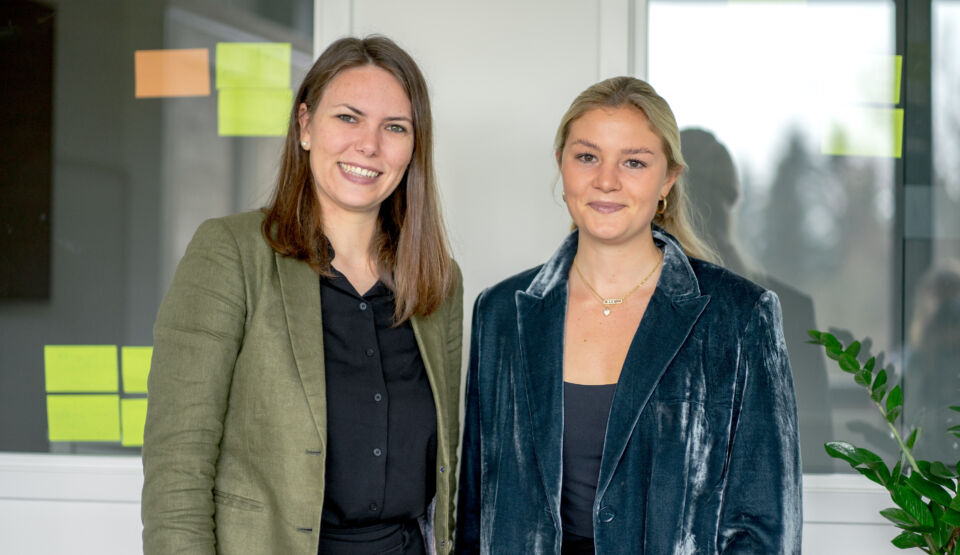
Ten years ago, sustainability was still a voluntary, secondary concern for many companies. Today, regulatory requirements, stakeholder expectations, and economic challenges shape our daily operations. To mark the 10th anniversary of Fokus Zukunft, our directors Janina Lang and Lena Scharr discuss how sustainability has evolved, the milestones that have shaped the company, and what will matter most in the future.
Lena Scharr: “I’m particularly proud of our evolution from a certificate trader into a credible, quality-oriented consulting firm. That wasn’t just a single step—it was a true journey. What I find particularly valuable is that along this path, we have grown not only professionally but also culturally. Many colleagues have been helping shape this journey for years. This blend of openness to change, trust, and genuine participation defines Fokus Zukunft. Our flexible and agile way of working has been absolutely crucial in this regard. Over the past ten years, it has repeatedly enabled us to continue evolving in a highly dynamic market environment and to respond quickly to new demands. For me, Fokus Zukunft stands as a symbol within our corporate group of venturing into new fields and trying out unfamiliar approaches, rather than resting on our laurels. And that is precisely why we, as an organization, continue to evolve together with our employees. For me, Fokus Zukunft today is, above all, a place where people can take on responsibility, contribute ideas, and actively help shape the future. That not only makes me proud, but it also simply brings me a great deal of joy.”
Janina Lang: “I would add another professional milestone to that: the continuous refinement of our CCF methodology and our professional approach. The external validation by GUTcert in accordance with the Greenhouse Gas Protocol was an important confirmation of our high quality standards. I am also particularly proud that we have been able to support numerous companies over many years and that individual projects have evolved into long-term partnerships.”
Lena Scharr: Thanks to our close ties to small and medium-sized businesses and the close collaboration within our corporate group, we don’t view challenges and objectives as a distant, external consultant would. We know from our own experience what really matters: pragmatism, quality, cost-effectiveness, and sustainability. That is exactly what we focus on in every project and every collaboration.
As is customary in the SME sector, we respond flexibly and individually to our clients’ needs. This allows us to support them in the way that is most appropriate and effective for them, rather than offering a one-size-fits-all solution that usually doesn’t really fit.
After all, every company faces new challenges time and again. That’s completely normal. What matters is correctly contextualizing these challenges within the specific business environment and responding appropriately. In this way, together—step by step—we move closer to our vision for transformation.
Janina Lang: For me, this is precisely one of the most important insights we’ve gained from our many years of working with companies: Sustainable change is only successful if it remains practical and is tailored to each client. That’s why we start by asking the right questions, listening carefully, and understanding our clients’ individual challenges.
Based on this, we develop pragmatic, tailor-made solutions that meet the specific needs of small and medium-sized businesses. Our goal is always to provide advice on an equal footing and to design sustainability initiatives in a way that creates real added value for the company.
Lena Scharr: Especially when companies face both regulatory and economic pressures at the same time, it’s easy to feel like you have to tackle everything at once. That’s exactly where guidance is needed: a clear vision that shows the direction we’re heading in and is also economically viable. For me, therefore, economic viability and sustainability are central guiding principles. Each of our projects is directly geared toward economic viability. This requires a long-term and sustainable perspective—which is precisely the approach we take. Only with this orientation can we set meaningful priorities and identify which issues are truly critical. And this is precisely where I see our role as a reliable partner. We navigate the maze of regulatory and economic requirements and, together with our clients, set the right priorities. This ensures our clients remain capable of taking action because they know what really matters.
Janina Lang: And that’s exactly why, in my view, it’s important not to view sustainability solely as a regulatory obligation. We’re convinced that sustainability is a driver of strategic decisions and long-term competitiveness. It is crucial to consider sustainability requirements and corporate strategy together. This requires not only data and analysis, but also a sparring partner like us who can help set the right priorities, maintain a broad perspective, and highlight the clear opportunities offered by effective sustainability management.
Janina Lang: The real question isn’t how sustainability and economic efficiency can be reconciled, but how companies can remain economically successful in the long term without taking sustainability into account. Those who strategically link these two issues strengthen their resilience, competitiveness, and future viability in equal measure.
Lena Scharr: Exactly. A successful, long-term corporate strategy fundamentally incorporates sustainability. Strictly speaking, anything else is not a forward-looking corporate strategy, but merely a series of short-term decisions and projects. Entrepreneurs, owners, or CEOs who understand this know that sustainability goals and economic requirements cannot be viewed separately—they must always be considered together. For us, sustainability means one thing above all else: a long-term perspective. And only a company that thinks long-term can achieve long-term economic success. This is precisely where we see our role. We see ourselves as partners and enablers who bring this mindset into the transformation of companies.
Janina Lang: Our VIEW Values—they stand for value-driven, personalized, genuine, and effective collaboration. At the same time, they describe our approach: acting with foresight, providing clarity, and keeping our clients’ future in mind.
Lena Scharr: We help companies make sustainability a profitable endeavor and ensure their long-term viability. That is exactly what Fokus Zukunft stands for.